When I first went out on my own, I had a short list of people I wanted to talk to.
Elizabeth was at the top.
She didn’t just give me advice. She handed me a proposal template… a real one, pricing logic baked in, nothing held back.
I opened it on a plane to Hawaii, four years ago, somewhere mid-Pacific. I never work on planes. I’m not someone who opens a laptop at 30,000 feet. But I had it pulled up before we hit cruising altitude, furiously building out my first real proposal somewhere between the clouds and the ocean, with nowhere else to be.
That’s the kind of person she is.
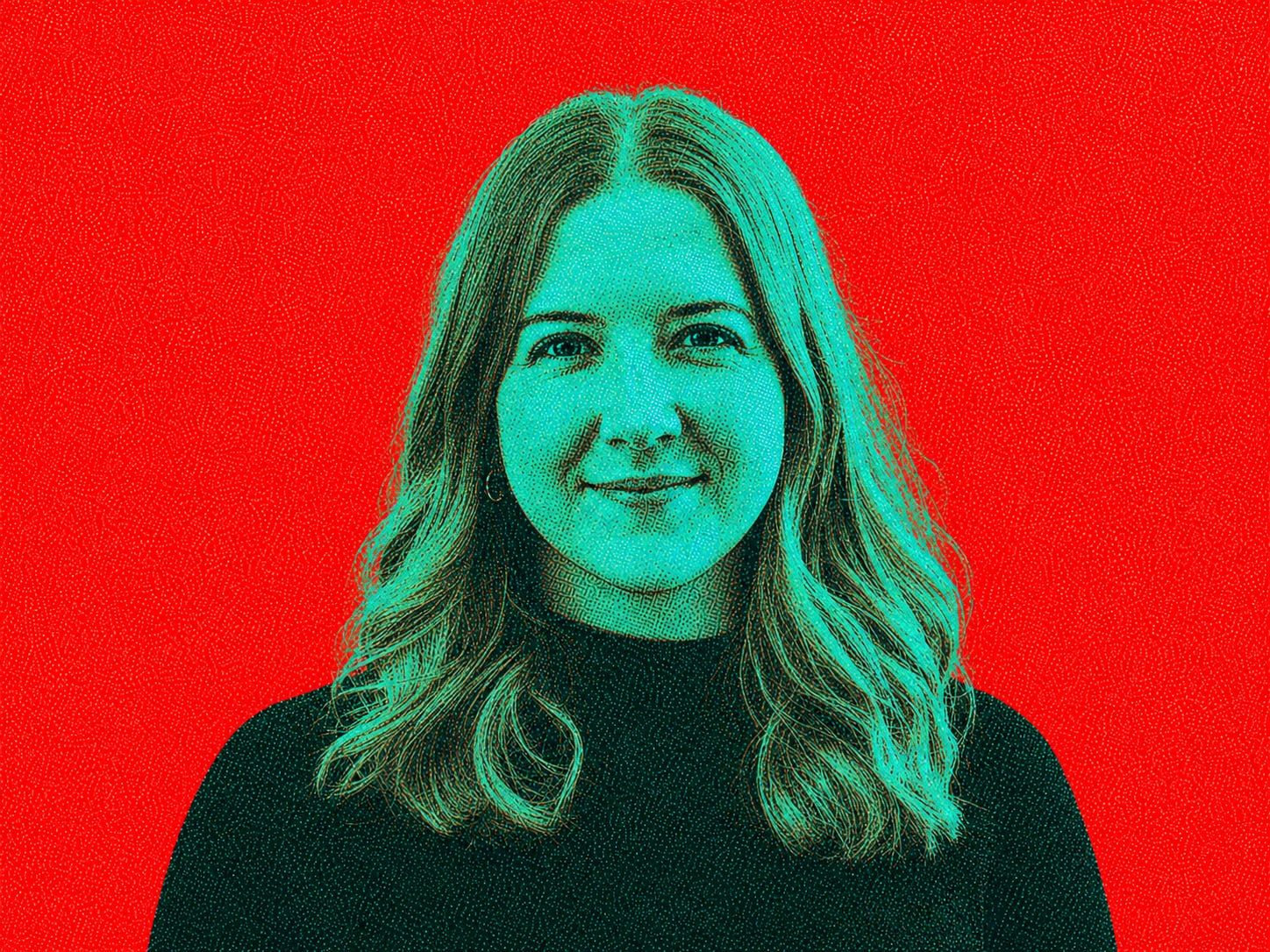
Elizabeth Creighton has a PhD in Cognitive Psychology, founded Brazen in 2017, and built a UX research consultancy that’s done work for Shopify, Mozilla, Instacart, Wealthsimple, Bumble, Autodesk, and more. She runs it mostly solo, mostly under 20 hours a week, and has taken two full maternity leaves without the business falling apart. She also teaches, courses on Maven, published with O’Reilly, training designers and PMs to do their own research.
We talked for about an hour.
“I Didn’t Really Have a Plan”
I asked Elizabeth if the 20-hours-a-week thing was always intentional. She laughed.
“I definitely didn’t envision myself working nine to five every day. But at first I wasn’t even sure I’d get 20 hours of work. It was just very unclear how quickly I’d get clients.”
What I find interesting is that the model wasn’t designed. It emerged. She figured out early that most research projects have natural breathing room: planning weeks are light, fieldwork weeks are heavy. The trick is staggering projects so the busy weeks don’t stack.
“Some weeks I’m running back-to-back interviews and it’s really intense. And then the weeks where I’m just writing a discussion guide or setting up Calendly, that’s like a handful of hours. So I try to Tetris my projects together.”
She’s currently running a little hotter than usual. One client has her on a three-day-a-week arrangement, more embedded than her typical project-based work. But she’s intentional about when that’s okay.
“I like this client. I don’t want to lose them. So I’m fine with going a bit over. But I know July will slow down, and I’ll breathe again.”
That’s a healthy relationship with overload. She’s not resisting it out of principle; she’s managing it with context.
How She Actually Gets Clients (It’s Not LinkedIn)
This was the part that caught me off guard.
Elizabeth does almost zero active business development. No cold outreach. No ads. Barely any LinkedIn posting.
“Almost all my business comes from referrals. And I do almost nothing to nurture that aside from one thing: a Christmas card. Just an email in December. It’s not even supposed to be marketing.”
Every January, multiple clients respond to that email and reach out about new projects. The card has a photo of her kids. There’s a donation made in clients’ names. It’s warm. It’s personal. And apparently it prints money.
She also has a newsletter, sporadic but useful. When she’s not busy, she writes it. When she is, she doesn’t. And that’s fine.
“I’ve gotten some work through it. But I’m not precious about consistency.”
The lesson: visibility doesn’t require volume. A handful of warm, genuine touchpoints outperform a content grind every time.
Does the PhD Actually Help?
I asked whether her PhD makes her more efficient.
She did not let me off easy.
“I took a very long time to finish my PhD. So it did not teach me great time management.”
What it does give her: credibility, especially with certain clients.
“I have one client right now who writes ‘Doctor Creighton’ in every email. He’s very tickled about it. I think it genuinely helps, especially as a woman, having that extra bit of clout.”
She’s also honest that the research skills themselves are what matter day-to-day. The PhD is a door-opener, not a workflow optimizer. Though she notes the conference presentations and paper-writing gave her strong communication skills she still draws on.
Breaking Into Enterprise: One Tweet Did It
I asked how she landed Mozilla, Shopify, Instacart, Wealthsimple. The answer was more accidental than most people would expect.
“I tweeted that I was starting my consultancy, back when Twitter wasn’t a cesspool, and immediately someone I knew from a book club in Chicago messaged me. She was now at Mozilla, they needed research on e-commerce, and I’d just left Shopify. That one tweet opened the door. I’ve done 12 projects with Mozilla since.”
The pattern holds across her whole client list. Someone moves companies. A referral shows up. A past client’s contact knows her name.
“I worked with TWG, and then they got bought by Deloitte. So now Deloitte is on my resume, and I technically never applied for anything.”
The enterprise credibility flywheel is real: Shopify gets you Mozilla; Mozilla gets you the next one. Each logo unlocks the next.
On Labels: Consultant, Not Freelancer
I asked Elizabeth how she labels herself. She went straight to consultant.
“I almost never say freelancer. I feel like I can charge more money as a consultant. And having my business under a business name, Brazen, makes it feel more like that.”
The word fractional has become common recently, but she was doing the thing years before the label existed. What she’s doing at Bumble right now, running all the research for one team, three days a week, while maintaining two other clients, is textbook fractional. She just didn’t need the word.
The practical distinction she draws: it’s not about hours. It’s about whether you’re accountable to a deliverable or accountable to a team’s ongoing outcomes.
Two Maternity Leaves, and the Business Survived
This was the most honest stretch of the conversation.
Elizabeth has taken two full maternity leaves while running Brazen solo. The first question most people ask is “how did you make it work?” But I asked what actually fell apart.
“I’m in Canada and you normally get government maternity leave pay, but only if you’re paying into EI. My business doesn’t. So I watched my bank account go down every month. That was hard.”
She still paid herself her regular salary, drawing from savings. It worked, but it made her nervous.
“I was always scared clients would forget about me. And then when I came back, I sent an email letting people know I was back, and I got projects from that email. That was enough to restart the engine.”
What she did help build, almost by accident: a Slack group of about 30 women who do research consulting. When work came in during leave, she passed it to them with a small referral fee.
“Mostly I just wanted to be nice. But it came back around.”
On her first leave, she took on one small project before she was ready. She described having “a few breakdowns” trying to juggle research work with a baby who didn’t nap on schedule.